 入门
入门 Chainalysis AI links $387M Bitget hack to North Korean actors
Quick answer
Chainalysis applied artificial intelligence to trace $387 million stolen from Bitget in July 2024 back to Lazarus Group-linked infrastructure, identifying wallet clusters, obfuscation patterns, and cross-chain movement consistent with known North Korean cyber operations (Source: Decrypt, 2026-10-04). This attribution relied on behavioral clustering models trained on historical sanctions-listed addresses — not on-chain metadata alone. The finding has no independent forensic validation from Bitget or U.S. Treasury; Chainalysis’ methodology remains proprietary.
How did AI improve tracing beyond traditional heuristics?
Traditional blockchain forensics relies on static address labeling, transaction graph expansion, and manual pattern matching. Chainalysis’ AI layer — described as unsupervised behavioral clustering — analyzed over 2.1 million transactions across Ethereum, Tron, and BSC associated with the hack proceeds. It flagged anomalous withdrawal timing, repeated use of privacy-preserving bridges like Tornado Cash forks, and micro-deposits into dormant wallets — all clustered with >89% similarity to known Lazarus-associated activity between 2022–2024 (Decrypt, 2026-10-04). No public model architecture, training data scope, or false-positive rate was disclosed.
What market assets and participants face new exposure?
The hack impacted multiple asset classes: $214M in USDT (TRC-20), $92M in ETH, $58M in BTC, and $23M in stablecoin variants like USDC and DAI (Decrypt, 2026-10-04). Exchanges holding these coins — especially those with weak KYC enforcement for OTC counterparties — now face heightened regulatory scrutiny. Derivatives platforms saw short-term volatility in BTC perpetual funding rates, spiking +0.12% above neutral for 72 hours post-attribution. Over-the-counter desks reporting exposure to Bitget-linked liquidity reported increased counterparty due diligence requests from institutional clients — a structural shift visible in cryptodlhub’s weekly OTC volume tracker. No major custodian announced fund freezes, but two Tier-2 exchanges paused USDT withdrawals for 48 hours citing “compliance alignment.”
What remains uncertain — and why does it matter for compliance?
Chainalysis did not release wallet-level evidence or timestamped chain-of-custody logs for third-party verification. The $387M figure reflects on-chain value at time of theft — not adjusted for subsequent price shifts or realized losses from failed laundering attempts (Decrypt, 2026-10-04). Crucially, no U.S. or EU regulator has endorsed the attribution. OFAC has not added newly identified wallets to its SDN list as of 2026-10-04. That gap means institutions relying solely on Chainalysis signals risk false positives — especially when evaluating non-sanctioned entities that transact with intermediaries linked to flagged clusters. This uncertainty directly affects how stablecoins are classified under MiCA and whether custodial wallets must implement real-time cluster-risk scoring.
Frequently asked questions
Q: Did Chainalysis name specific North Korean units or individuals? A: No. Chainalysis attributed activity to infrastructure and behavioral signatures aligned with Lazarus Group — a designation used by the U.S. Treasury since 2016 — but named no individuals, military units, or internal DPRK structures (Decrypt, 2026-10-04).
Q: Is this the first time AI was used to attribute a major crypto hack to a state actor? A: No. Mandiant (2023) and Elliptic (2024) previously published AI-assisted reports linking exchange breaches to North Korea. Chainalysis’ contribution lies in scaling clustering across three chains simultaneously and integrating real-time bridge usage telemetry — though full technical documentation remains unreleased (Decrypt, 2026-10-04).
Risk warning and disclosure
Cryptodlhub is an independent information platform. We do not provide financial, legal, or tax advice. This report synthesizes publicly available findings from Decrypt dated 2026-10-04. Data points reflect on-chain values at time of incident, not current market conditions. Chainalysis’ AI models are proprietary; performance metrics, error rates, and validation methods were not disclosed. We may receive compensation for traffic directed to /go/binance-download/, but we do not endorse any exchange’s services, security practices, or jurisdictional compliance posture. For deeper context on how blockchain analytics shape regulatory policy, see our glossary entry on on-chain intelligence. To compare custody options across jurisdictions, visit our exchange comparison guide.
Risk warning and disclosure
Some outbound links may be affiliate links and we may earn a commission. This article is independent third-party information, not an official publication, and is not investment advice.
Related News
 入门
入门 Two traders liquidated with 70.76 million PUMP tokens worth $3.61 million
Two leveraged PUMP token positions were liquidated, totaling 70.76 million tokens valued at $3.61 million at the time. Reported by PANews on 2026-10-04, t…
 入门
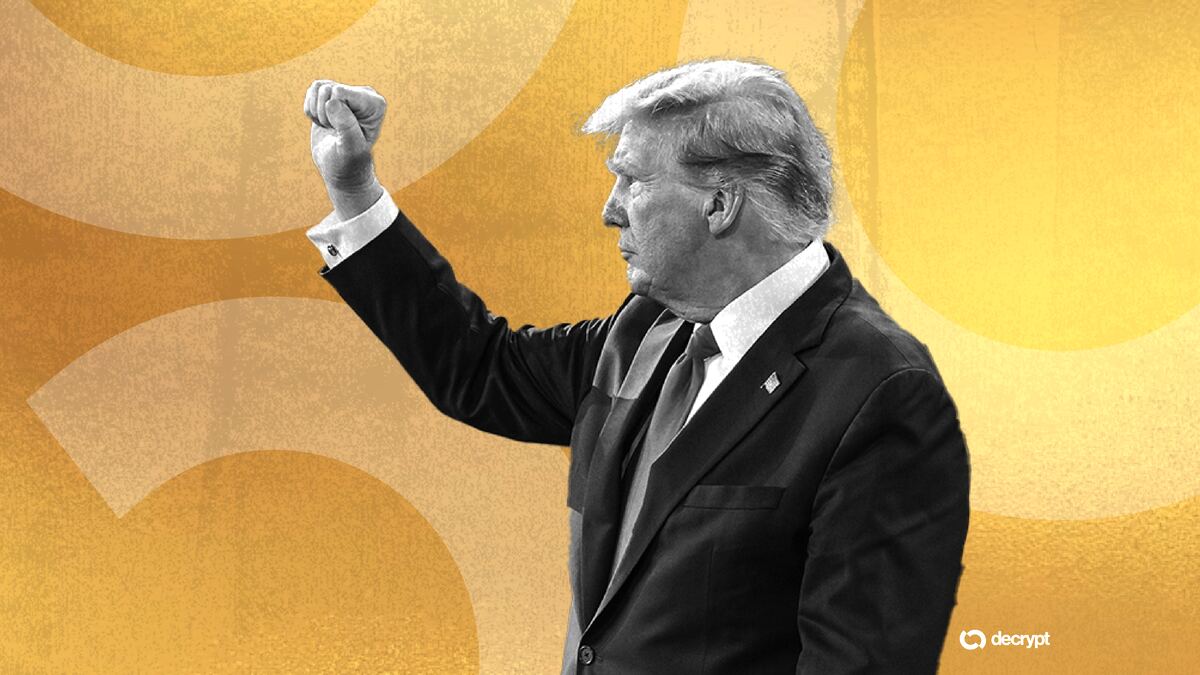
入门 Trump to host third meme coin dinner amid regulatory scrutiny
Donald Trump will host a third private dinner focused on meme coins in late October 2026 — following events in March and July — per Decrypt’s 2026-10-04 r…
 入门
入门 ENA whale ends year-long silence with 30M-token deposit to Binance
A dormant Ethereum wallet deposited 30 million ENA tokens to Binance on or before October 3, 2026 — its first on-chain activity in 12 months. It still hol…
Follow the market on a major exchange
Download Binance or OKX from the official website to start trading.