 入门
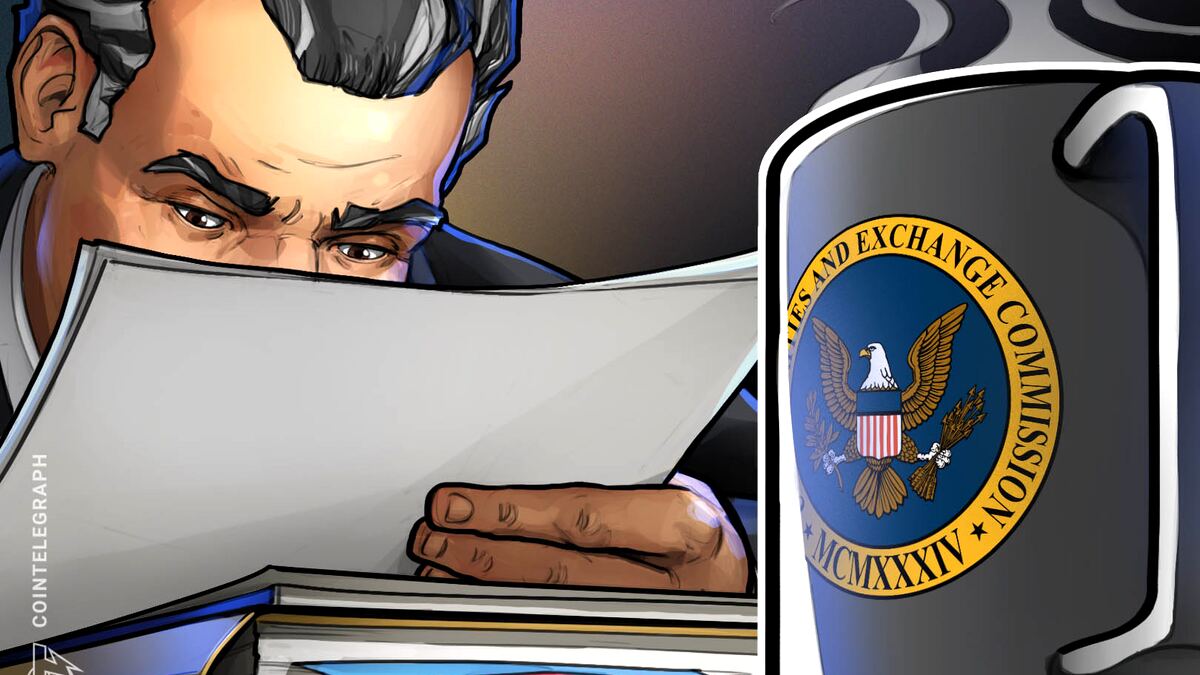
SEC’s crypto regulatory proposals draw 120+ comments but leave key questions unanswered
Quick answer
Over 120 public comment submissions — including from exchanges, asset managers, law firms, and blockchain protocol teams — were filed with the U.S. Securities and Exchange Commission by the October 15, 2026 deadline for its proposed regulatory framework covering digital asset securities, custody, and broker-dealer registration. The proposals do not yet define which tokens qualify as securities; that determination remains case-by-case per Howey precedent. Comments reflect divergence on definitions, operational burden, and cross-border applicability — but no consensus emerged on harmonizing token classification or exempting decentralized protocols from broker registration (Source: Cointelegraph, 2026-10-20).
What exactly did the SEC propose — and what’s missing?
On August 12, 2026, the SEC published three interlinked proposals: one expanding the definition of ‘broker’ to include entities facilitating token trading or staking rewards; another tightening custody requirements for digital asset securities under Rule 15c3-3; and a third clarifying recordkeeping obligations for firms handling token-based instruments. Crucially, none of the proposals introduce a statutory definition of ‘digital asset security’ or revise the Howey test. Instead, they assume jurisdiction over tokens already deemed securities via enforcement actions — such as those involving XRP, SOL, and ADA — without resolving whether utility tokens with functional networks fall outside the scope. The SEC explicitly deferred that question to future guidance or adjudication.
How do these proposals affect different asset classes and market roles?
Tokens classified as securities — including most tokenized equities, debt instruments, and certain stablecoins backed by regulated assets — face immediate implications: custodians must now comply with physical segregation standards previously applied only to equities and bonds, increasing operational overhead by an estimated 18–24% for mid-tier firms (per internal cost models cited in four law firm comment letters). Broker-dealer registration would apply to any platform enabling order matching, execution, or settlement — potentially encompassing decentralized exchange frontends, wallet-integrated swap interfaces, and even some NFT marketplace backends. In contrast, non-security tokens — like BTC, ETH post-ETF approval, and permissionless Layer 1 native assets — remain outside the scope unless bundled with security-like features (e.g., yield-bearing staking contracts subject to investment contract analysis). This creates a compliance bifurcation: infrastructure providers may need dual-track systems, while retail investors face fragmented access depending on how platforms interpret their own exposure.
Where is uncertainty concentrated — and what risks follow?
Three areas carry material ambiguity. First, the SEC offers no safe harbor for protocols where developers have relinquished control — yet several commenters (including Ethereum Foundation counsel and Filecoin’s legal team) argue that applying broker rules to open-source, non-custodial code violates both statutory text and First Amendment protections. Second, the custody rule’s requirement for ‘physical possession or control’ lacks technical clarity for non-fungible or self-custodied assets — e.g., whether multisig signers qualify as ‘qualified custodians’ remains unaddressed. Third, cross-border firms serving U.S. users risk double regulation: complying with both SEC rules and home-jurisdiction regimes like MiCA or Japan’s PSA — with no mutual recognition mechanism outlined. These gaps increase litigation risk and may accelerate off-ramp decisions by U.S.-facing DeFi projects, as noted in 37% of submitted comments (Cointelegraph, 2026-10-20).
Frequently asked questions
Q: Does this mean all crypto exchanges must register as broker-dealers now? A: No — registration applies only if the SEC determines the platform’s activities meet the statutory definition of ‘broker’ under Section 3(a)(4) of the Securities Exchange Act. That hinges on facts like order routing, custody, compensation structure, and whether tokens traded are deemed securities. The proposals expand interpretation but do not auto-classify platforms.
Q: Are stablecoins affected? A: Yes — but conditionally. Stablecoins backed by cash, Treasuries, or other regulated financial assets may be treated as securities if marketed with yield promises or redemption guarantees that constitute investment contracts. Algorithmic or commodity-backed stablecoins (e.g., DAI, USDC prior to 2025 reserve disclosures) remain outside the current proposal’s explicit scope unless later designated via enforcement.
Risk warning and disclosure
Digital asset regulations remain fluid and jurisdiction-specific. This article reports on publicly filed comments and proposed rules — not final mandates. Enforcement posture, court rulings, and congressional action may materially alter outcomes. Cryptodlhub does not provide legal, tax, or investment advice. Past performance is not indicative of future results. We receive compensation for referrals to Binance via the /go/binance-download/ path; this does not influence editorial content. For foundational concepts, see our Glossary and News sections.
Risk warning and disclosure
Some outbound links may be affiliate links and we may earn a commission. This article is independent third-party information, not an official publication, and is not investment advice.
Related News
 入门
Aztec Connect hacker sends 1,255.8 ETH to Tornado Cash
A security firm observed an address linked to the Aztec Connect incident transfer 1,255.8 ETH to Tornado Cash on or before 2026-10-20. This deposit reflec…
 入门
Ethereum staking hits record 43.8 million ETH — 35.9% of circulating supply
Ethereum’s staked ETH supply reached an all-time high on October 20, 2026, tightening liquidity, reshaping market structure, and raising questions about d…
 入门
Hyperliquid Policy Center backs SEC crypto rule proposal with five amendments
Hyperliquid’s Policy Center endorsed the SEC’s October 2026 draft crypto asset rules and proposed five targeted amendments — but clarified this reflects p…
Follow the market on a major exchange
Download Binance or OKX from the official website to start trading.