 入门
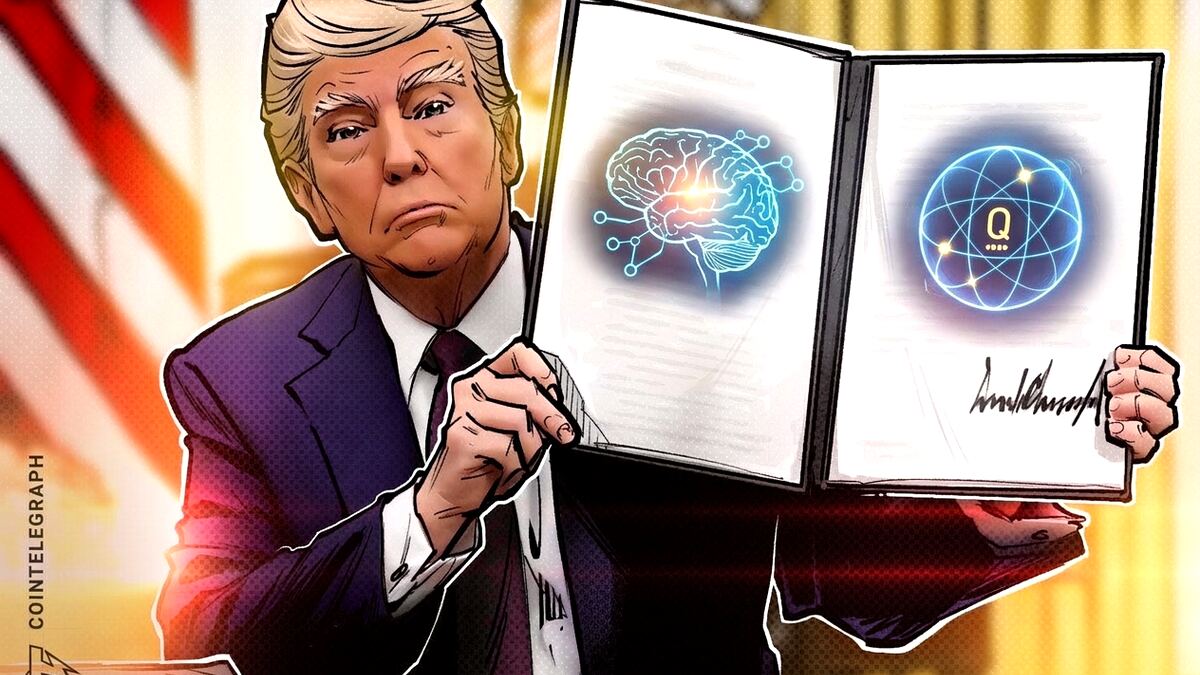
Trump administration proposes $6B science funding plan for quantum and AI
Quick answer
The Trump administration outlined a $6 billion U.S. federal science investment plan focused on quantum computing and artificial intelligence, according to a Cointelegraph report published on October 9, 2026. The announcement included no mention of cryptocurrency, blockchain regulation, digital asset infrastructure, or timelines for implementation. It did not revise existing U.S. crypto enforcement frameworks or allocate funds to crypto-related research. Market participants should treat this as a broad R&D signal—not a regulatory pivot—until further official documentation emerges.
What does the $6 billion cover—and where is it coming from?
This is a proposed federal budget allocation, not enacted legislation. The $6 billion figure appears in a single Cointelegraph news summary dated October 9, 2026, citing unnamed administration briefings. No Office of Management and Budget (OMB) circular, congressional appropriation bill, or White House fact sheet has been publicly released to verify the amount, funding source, or fiscal year. The proposal references ‘science priorities’ including quantum information science and AI safety, but omits line-item breakdowns, agency assignments (e.g., NSF, NIST, DOE), or eligibility criteria for grants. Without legislative backing or OMB guidance, the number remains an unconfirmed administrative talking point—not a budget line.
How might this affect crypto markets and infrastructure?
Quantum computing research could eventually impact cryptographic primitives used in Bitcoin and Ethereum, but current NIST post-quantum cryptography standardization (completed in 2024) already addresses that risk path. This $6 billion proposal does not accelerate or delay NIST’s timeline. For AI, no link was drawn between the initiative and on-chain analytics, smart contract auditing tools, or AI-driven trading platforms. Tokenized assets, stablecoin issuers, and DeFi protocols remain outside the scope of the stated goals. U.S.-based hardware startups working on quantum-resistant chips may qualify for future grants—but only if they meet conventional NSF or DARPA criteria, not crypto-specific ones. Investors should monitor U.S. federal funding announcements rather than assume automatic spillover into crypto infrastructure.
What’s missing—and why does it matter for compliance?
The Cointelegraph article contains zero references to digital assets, blockchain, or financial technology regulation. There is no mention of the SEC, CFTC, FinCEN, or interagency coordination on crypto oversight. No new executive order, rulemaking notice, or enforcement memo accompanies the announcement. That absence matters: unlike prior administrations’ tech initiatives (e.g., the 2022 Executive Order on Digital Assets), this one makes no linkage between foundational science and financial innovation or consumer protection in crypto markets. Readers should not infer regulatory clarity, enforcement pause, or licensing pathway from this report. For context on how U.S. agencies currently interpret crypto rules, see our glossary entry on regulatory classifications.
Frequently asked questions
Q: Does this $6 billion include funding for blockchain or cryptocurrency projects? A: No. The Cointelegraph report (2026-10-09) explicitly names quantum computing and AI as the sole focus areas. Blockchain, distributed ledger technology, digital wallets, or token economics are not referenced.
Q: Is this funding already approved by Congress? A: No. The article describes an administrative outline—not an appropriation. As of October 9, 2026, no bill containing this $6 billion allocation has passed either chamber of Congress, nor has it appeared in the President’s formal budget request documents.
Risk warning and disclosure
This article reports on a single media summary of an unconfirmed federal science funding proposal. It does not constitute financial, legal, or tax advice. Cryptocurrency investments are volatile and carry substantial risk of loss. Past performance is not indicative of future results. We do not guarantee the accuracy or completeness of third-party reporting. This site contains affiliate links: we may earn a commission if you use the Binance download page after clicking through. We do not receive compensation for coverage of specific coins, exchanges, or policies. Official domain names like binance.com are cited for identification only—not as endorsements or referrals.
Risk warning and disclosure
This article is independent third-party information, not an official publication, and is not investment advice.
Related News
 入门
Whale shorts $50.8M ETH amid market structure shifts
A single Ethereum-linked address opened $50.8M in ETH perpetual futures shorts, per PANews (2026-11-24). The same entity previously realized $20.5M in net…
 入门
Ansem Wallet Incident: ~$2.15M USDC Moved Amid Security Questions
Approximately $2.15 million in USDC was transferred from multiple Ansem-linked wallet addresses between November 22–23, 2026. No official breach confirmat…
 入门
Binance hacker laundered $247M through mixers, Elliptic finds
Elliptic’s chain analysis confirms at least $247 million in stolen Binance assets passed through cryptocurrency mixers within 72 hours of the 2026 breach.…
Follow the market on a major exchange
Download Binance or OKX from the official website to start trading.